“Ensuring safe air at 30,000 feet is an obligation, not an option.”
»»»» SPAC.pt |||| SNPVAC.pt ««««
Information and Support in Cases of Exposure to Fumes in Commercial Aircraft
Fume Event?
If you are a Pilot or Cabin Crew Member, report your event to us, whether recent or past. We may be able to assist you and help mitigate the global issue. Relevant cases may become part of an ongoing scientific study. SPAC/SNPVAC Members will be offered a free testing kit for the detection of organophosphates.
Useful Information
Take our Fumes Briefing with you, to read offline!
Fume Events
“Various types of fumes, smoke, haze and mist may contaminate the cabin and flight deck air supply system. Outside air may be contaminated with engine oil, hydraulic fluid, engine exhaust, ground service vehicle exhaust, fuel, de-icing fluid or ozone.[...] Of all of these potential contaminants in the cabin and flight deck, particular concerns have been raised regarding the negative impact on flight safety when crew members are exposed to oil or hydraulic fluid fumes or smoke, and experience acute symptoms in flight. Due to the potential flight safety implications, it is beneficial to provide guidance and instructional material to enable crew members to promptly recognize and respond to suspected air supply system-sourced fumes, as well as to enable aircraft maintenance technicians (AMT) to identify the source of the contaminants and to correct the issue.”
Definitions
Contaminant: a suspended element, with or without odor, that may reduce air quality.
Fume(s): invisible gaseous compounds, but with an odor. [Note – In the context of this circular, vapors and odors are considered synonymous; however, there are potential odorless contaminants, and therefore any symptoms should not be disregarded].
Smoke: the product of burning materials made visible by the presence of small particles.
Cir 344-AN/202 Guidelines on Education, Training and Reporting Practices related to Fume Events [ICAO 2015]
Sources and Types of Odours
Various sources and types of odours may occur on board, and it is important to understand that not all pose the same level of risk. Recognition is primarily by smell, as well as by the location of the odour, given that the industry still lacks adequate detectors. Among the main possible sources, particular attention is given to odours derived from engine/APU oil, due to the serious health consequences observed in our Members following repeated exposure of this type. Recognition of these events is facilitated by a characteristic smell of “dirty socks”, “feet odour”, or “humidity”. This odour comes from the presence of valeric acid in the oils used. While not toxic by itself, this acid serves as a warning due to its distinctive odour, which is also commonly found in gym lockers.
Symptoms and Clinical Effects
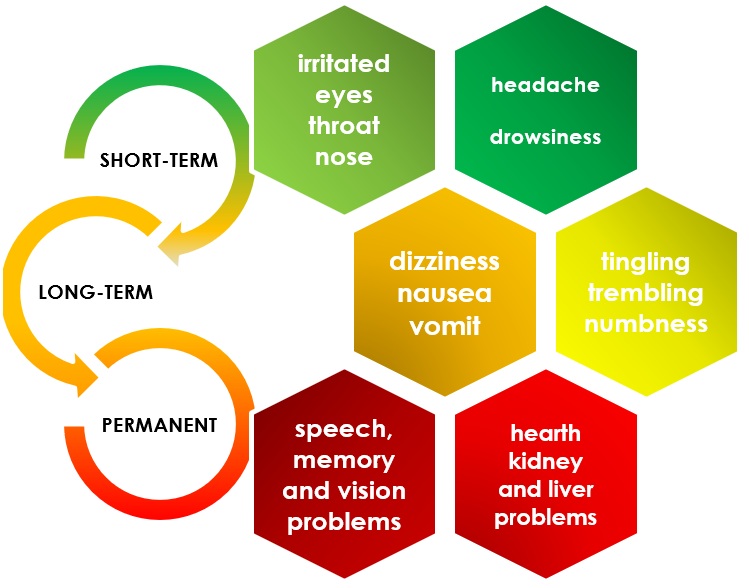
Exposure to fumes/odours may occur without significant consequences, or it may cause health impacts in the medium/long term. Personal susceptibility, intensity, and duration of exposure are key factors. There may be only unpleasant odours, but some more immediate symptoms can also appear during the flight. Others may develop over the following days or weeks. In less frequent cases, long-term effects and permanent disabilities have been reported, typically affecting neurological, reproductive, renal, and hepatic systems.
REFERENCES:
Briefing Leaflet on Cabin Fumes [IFALPA 2023]
ECA GUIDELINES on SMOKE & FUME / SMELL EVENTS [ECA 2017]
Post Smoke/Fume Event Procedure [GCAQE 2024]
Technical Information for Pilots
Aircraft Acceptance
In the aircraft acceptance process, Pilots must pay due regard to any previous, recent or past complaints. It is recommended to use the search fields in electronic logbooks, looking for recurrence of events and patterns in location (fwd/aft cabin, cockpit), moment (use of APU bleed, power changes), intensity and type of smell. Pilots must critically analyze previous complaints and fixes.
AIRBUS aircraft - APU inlet and "Securing the Aircraft"
On Airbus aircraft, it is essential to pay due attention to the condition of the APU inlet upon arrival at the aircraft: "Exterior Safety Inspection". An open inlet indicates that the aircraft's batteries were disconnected before the APU shutdown cycle ended, and constitutes a risk condition for the appearance of smoke in the cabin during the following flight, according to FCOM/SOPs/”Securing the aircraft”. It is FCOM procedure to wait 2 minutes to disconnect batteries after “APU AVAIL” light off, during the “Securing the Aircraft” procedure. The presence or absence of external power has no effect on this issue. More information atAirbus FAST#52.
Oil overfill
Pay close attention to potential oil overfilling in the engines. Higher than usual indications, especially with cold engines, should be clarified with maintenance. The maximum level must be respected, in accordance with the maintenance manual. The actual oil level can be checked in engines using the appropriate procedure.
LEAP ENGINES- Load Reduction Device [LRD]
LEAP engines, which equip the A32F NEO and B737 MAX fleets, among others, are equipped with the Load Reduction Device [LRD] system. Activation of this system causes the release of quantities of smoke in the cockpit and cabin, which could cause incapacitation. EASA issued SIB 2025-06 in July 2025, encouraging operators to inform their Pilots about the aircraft on which the system exists, as well as to implement possible mitigations. We know that, even today, many Pilots are not aware of the existence and risks associated with this system. As such, SPAC fulfills its information mission, alerting Members to seek further clarification, and to consider possible mitigations.
Airbus A330 - OEB 53
On Airbus A330-941 NEO Aircraft, OEB 53 must be applied 1) when requested by maintenance, through an entry in the technical logbook or 2) following the ECAM ENG 1(2) START FAULT. After take-off, and if the OEB was not initially applied, and oil odors appear, the procedure to apply is SMOKE/FUMES/AVNCS SMOKE.
REFERENCES:
Airbus FAST#52 [AIRBUS 2013]
EASA SIB 2025-06 [EASA 2025]
Mitigations Concerning Load Reduction Device Activation in CFM International LEAP-1B Engines [NTSB 2025]
Airbus A318/A319/A320/A321 Aircraft Maintenance Manual [AIRBUS 2025]
Support in Case of an Event
This section outlines what to do if you are involved in a fumes event.
Crew Action During a Fumes Event!
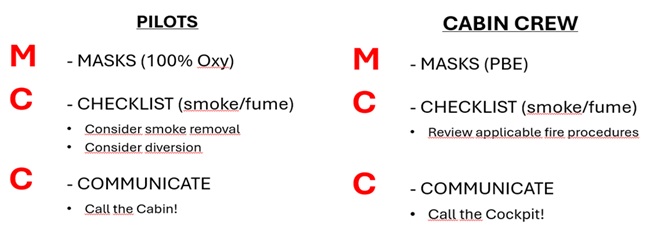
To ensure the safety of everyone on board, crew members must first ensure their own safety. In the event of a well-founded suspicion of cabin air contamination, they should:
• Protect themselves using oxygen masks or a PBE (Protective Breathing Equipment).
• Apply the procedures associated with Smoke/Fumes/Fire as soon as possible. If it is not possible to eliminate the source of potential contamination, the "Smoke Removal procedure" should be considered, including aircraft depressurization if required.
• Immediate establishment of cockpit↔cabin communication is essential for an appropriate and coordinated response.
REFERENCES:
Briefing Leaflet on Cabin Fumes [IFALPA 2023]
ECA GUIDELINES on SMOKE & FUME / SMELL EVENTS [ECA 2017]
I've experienced fumes! Now what?
After landing...
• Assess crew's symptoms. Act according to the level of severity observed.
• Follow the Serious Incident Checklist.
• Report the event in the aircraft technical log.
• Complete in detail the
ICAO SMOKE/FUMES Reporting Form or your Operator’s equivalent. Ensure a copy is delivered to Maintenance.
• Do not perform decontamination with passengers on board. Only essential crew and maintenance personnel should be on board, using appropriate personal protective equipment: face mask with ABEK1P3 type protection.
• Complete the ASR within 72 hours after the occurrence. Wait until near the end of the period to include any clinical consequences of the event for crew and/or passengers.
IN CASE OF PREVIOUS FUMES REPORT, BEFORE ACCEPTING THE AIRCRAFT, ENSURE THE FOLLOWING, OR SIMILAR APPLICABLE MAINTENANCE TASKS, HAVE BEEN PERFORMED:
• TSM TASK 05-50-00-810-831-A [A320]
or,
• TSM TASK 05-50-00-810-829-A [A330]
and,
• APPLICABLE AMM TASKS AS PER THE OUTCOME OF THE TSM TASK: ELIMINATION OF THE PROBABLE CAUSE AND DECONTAMINATION OF THE A/C SYSTEM.
DO NOT ALLOW DECONTAMINATION WITH PAX OR UNPROTECTED CREW ONBOARD.
In cases of possible acute fumes intoxication, the most noticeable symptoms are eye/respiratory irritation, nausea, dizziness and headaches. Frequently reported are also gastrointestinal changes, some mental confusion, extreme fatigue, speech difficulties, and temporary memory lapses. Tingling or numbness may occur, usually in the fingertips. However, even in the absence of acute symptoms, medical consultation is recommended.
Within 4 to 24 hours after potential exposure, a medical consultation should be performed, including examination appropriate to the patient’s complaints, neurological assessment, and a set of specific blood tests as listed below:
• Complete Blood Count (CBC);
• Glucose;
• AST; ALT;
• LDH; CK; GGT;
• Urea/BUN; Creatinine;
• Electrolytes;
• Methaemoglobin;
• Carboxyhaemoglobin;
• Cholinesterases (AChE + BChE);
The
GCAQE guide
can be used to explain the specifics of the situation and the type of tests requested to the healthcare professional. Use waiting time during the medical consultation to report the event to the Unions via the appropriate form.
It is recommended not to fly again while symptoms persist or without reassuring clinical test results. Follow medical advice and seek second opinions if necessary. If the event occurs in the scope of your professional activity, it is strongly recommended to obtain the corresponding accident at work declaration.
In the following weeks...
• Repeat the above tests at least between the 10th and 15th day after the event, and again 60 days after potential exposure.
Post-exposure test results should ideally be compared with your personal baseline obtained previously, through the same tests conducted annually after a vacation period without flight exposure.
• Contact your Union to obtain a free
TCP detection test kit.
Briefing Leaflet on Cabin Fumes [IFALPA 2023]
ECA GUIDELINES on SMOKE & FUME / SMELL EVENTS [ECA 2017]
Post Smoke/Fume Event Procedure [GCAQE 2024]
Media clipping
Highlights on news clips about Fumes Events.
- 🌐 [INVESTIGAÇÃO SIC] "Eventos de fumes": o perigo invisível dentro dos aviões
- 🌐 [Wall Street Journal] Toxic Fumes Are Leaking Into Airplanes, Sickening Crews and Passengers
- 🌐 [Wall Street Journal] Toxic-Fume Leaks Prompt Airlines to Push for Less Hazardous Engine Oils
- 🌐 [Wall Street Journal] 'He was poisoned.' Toxic fumes on planes blamed for deaths of pilots and crew
- 🌐 [BBC] Fume events: The toxic gases that may be harming aircrew and passengers
- 🌐 [The Times UK] EasyJet to filter toxic air in cabins
- 🌐 [USA Today] Fumes onboard an American Airlines flight sent 5 to hospital
- 🌐 [AVSA] World First: Aerotoxic Syndrome Recognized as an Occupational Disease Following Chronic Exposure
FAQs about Fumes
A smell of dirty socks/feet, wet dog/mould, chemical/detergent smells, or a sour smell/taste are generally the odours associated with greater concern, as they may be linked to potential engine or hydraulic oil leaks. Other odours may also be detected, related to cabin items, electrical issues/burning smells, or chlorine, originating from different sources. Symptoms may also occur without any noticeable smell. For example, carbon monoxide is known to be toxic and odourless. Any abnormality should be reported.
Identify, if possible and always safely, the source of the problem (visually, if visible fumes/vapours are present), without delaying communication between crew members, and continuously assess the need for oxygen use.
In the initial stage, eye and/or respiratory tract irritation, a metallic or other unusual taste may occur. This may be followed by dizziness, nausea, headache, breathing difficulties, abnormal fatigue, speech or cognitive difficulties. In the medium/long term (days, weeks or months), gastrointestinal, pulmonary, neurological or other disorders may develop. Symptoms vary between individuals; therefore, personal monitoring is essential, and communication with the rest of the crew after the event is important in order to identify common symptoms.
Yes. All fumes events must be reported in accordance with each Airline’s procedures. Cabin crew without supervisory/command functions may use the flight safety option of the general safety concern report, or the equivalent system in use at their Airline, typically accessible to all employees via the Safety Management System reporting tools. Events that go unreported effectively “do not exist”, hindering risk identification and implementation of mitigation measures.
Under Annex I of Commission Implementing Regulation (EU) 2015/1018 , the event “Contaminated air in the cockpit or in the passenger compartment which has or could have endangered the aircraft, its occupants or any other person” is subject to mandatory reporting. As there is no immediate way, in flight, to identify the potential contaminant responsible for abnormal odours or symptoms, all situations should always be treated as potentially serious, unless the source is obvious and non-toxic. This must always be assessed before any premature decision is made.
Follow the “Serious Incident Checklist”. If the clinical condition of those involved allows, the event should be reported immediately in accordance with Company procedures: ASR/CSR, aircraft technical log, “Smoke/Fumes Reporting Form”, Flight Report/Cabin Report. Subsequently, seek medical support in line with the procedures established by your airline for medical assistance at base or out of base. While waiting for medical attention, report the event to the Unions via the appropriate form. It is important to raise awareness among the medical team of the need to follow a comprehensive protocol, as per the SPAC/SNPVAC Fumes Briefing, available at www.fumes.pt.
Yes. Carry out the relevant clinical tests after the event, in accordance with the SPAC/SNPVAC Fumes Briefing, available at www.fumes.pt, and keep monitoring for ano symptoms in the hours and days after the event.
Persistent headache, dizziness, extreme fatigue, nausea, confusion, respiratory or eye irritation.
For at least 48 to 72 hours after the event. Some symptoms, such as gastrointestinal, respiratory or neurological disturbances, may appear days or weeks after the event.
Yes. Inform the relevant medical department.
A work accident is considered to have occurred when there is an injury or functional impairment caused by exposure at the workplace and during working time, resulting in reduced work capacity. That is, when symptoms persist or an injury is observed during a clinical examination.
As per medical advice. If you are not satisfied with the initial medical assessment, seek a second medical opinion. Consult your Union.
Some effects may appear at a later stage and require proper recording and clinical follow-up.
To take care of their own health, carry out the required clinical tests within the defined timeframes, and do not minimise symptoms. The SPAC/SNPVAC Fumes Briefing, available at www.fumes.pt, details the tests and associated timelines.
-
Preventively carry out the recommended set of clinical tests in order to establish a baseline (personal reference values). This sampling should ideally take place at the end of a vacation period with no flight exposure and will serve as a comparison after any potential exposure.
- Critically review the aircraft technical log history, looking for recurrence of events and patterns in location (forward/aft cabin, cockpit), timing (use of APU bleed, power changes), intensity and type of smell. Previous complaints and corrective actions should be analysed with a critical mindset.
- On Airbus aircraft, pay particular attention to the condition of the APU inlet upon arrival at the aircraft (safety exterior inspection). An open inlet indicates that the aircraft batteries were switched off before completion of the APU shutdown cycle and represents a risk condition for cabin smoke during the subsequent flight, in accordance with FCOM/SOPs/“Securing the aircraft”. FCOM procedure requires waiting 2 minutes before switching off the batteries after the “APU AVAIL” light extinguishes during the “securing the aircraft” procedure. The presence or absence of external power has no effect on this issue. Further information is available in Airbus FAST#52.
- Pay attention to potential engine oil overfilling. Oil quantity indications above normal, especially with cold engines, should be clarified with maintenance.
Pilots can also:
Articles and References
Technical Information
📖 ICAO. (2015). Guidelines on education, training and reporting practices related to fume events (ICAO Circular 344).
📖 Anderson, J. T. L. (2025). Lessons Learned from Official Airline Reports of Onboard Fumes and Smoke. Aerospace, 12(5), 437.
📖 IFALPA. (2023). Cabin fumes: Briefing leaflet (23HUPBL01).
📖 Scholz, D. (2021). Hearing on the operation of air conditioning in aircraft cabins and the associated air quality [Presentation]. Forschungsgruppe Flugzeugentwurf und -systeme (AERO), Hamburg University of Applied Sciences.
📖 Airbus S.A.S. (2013). FAST #52: Flight Airworthiness Support Technology [Technical magazine].
📖 Airbus S.A.S. (2018). ISI 21.21.00011: Troubleshooting cabin air quality issues [Technical article].
📖 ECA. (2017). Guidelines on smoke, fume & smell events.
Medical Information
📖 Lotti, M., & Moretto, A. (2005). Organophosphate-induced delayed polyneuropathy. Toxicological reviews, 24(1), 37–49.
📖 Michaelis, S., & Pont, R. (2024). Post-smoke/fume event procedure. Global Cabin Air Quality Executive.
📖 Burdon, J., Budnik, L.T., Baur, X. et al.
Health consequences of exposure to aircraft contaminated air and fume events: a narrative review and medical protocol for the investigation of exposed aircrew and passengers. Environmenal Health 22, 43 (2023).
Additional Information
📖 Chanysheva, A. (2016).
Electrochemical sensing system for detection of organophosphate neurotoxins (Master’s thesis). Auburn University.
Contacts
- SPAC - Sindicato dos Pilotos da Aviação Civil
- 📍 Rua Frei Tome de Jesus 8, 1749-057 Lisboa, Portugal
- 🌐 www.spac.pt
- ✉️ caq@spac.pt
- ☎️ (+351) 217 926 830 / 00
- SNPVAC - Sindicato Nacional do Pessoal de Voo da Aviação Civil
- 📍 Av. Almirante Gago Coutinho 90, 1700-031 Lisboa, Portugal
- 🌐 www.snpvac.pt
- ✉️ geral@snpvac.pt
- ☎️ (+351) 21 842 4000